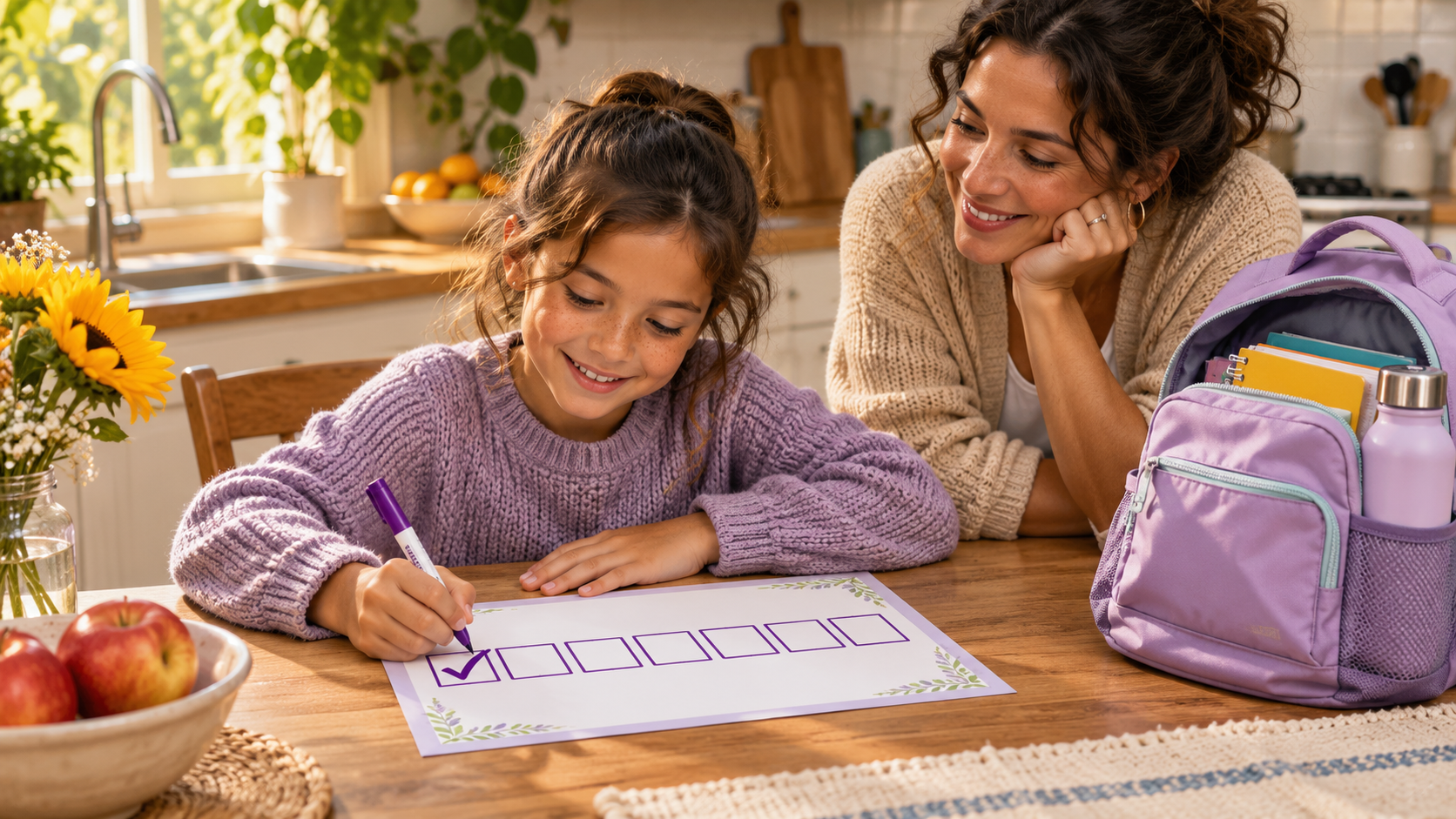
When parents hear the words self-discipline, they may picture a child who completes homework without reminders, cleans up without being asked, and never loses focus. Real self-discipline rarely looks that tidy. It develops through small choices repeated over time.
A child who decides to practice a skill for five minutes, follows through, and notices the improvement has experienced something important: I can do what I said I would do.
Start small enough to succeed
Choose one action your child can realistically complete today. It might be putting shoes away after school, reading for ten minutes, or practicing a martial arts stance. Make the goal specific. “Be more responsible” is difficult to measure; “put my backpack in its place when I get home” is clear.
Then give the child ownership. Ask, “What is one promise you want to make to yourself this week?” A commitment the child helps choose is easier to understand and practice.
Progress matters more than perfection
Children will forget. Adults do too. When a commitment slips, the useful question is not “Why can't you ever remember?” but “What would make it easier tomorrow?” A reminder by the door, a checklist, or a different time of day may be all that's needed.
Praise the process: noticing a mistake, trying again, and following through. The goal is not obedience for its own sake. It is growing the ability to choose an action and carry it out.
What martial arts can reinforce
In martial arts, students improve by returning to basic movements and practicing them carefully. A technique that feels awkward today may feel natural after weeks of repetition. That experience offers a concrete lesson: consistent effort changes what we can do.
At Edge Martial Arts in Stillwater, we want students to recognize that the habits they practice in training can help them in school, at home, and in everyday life.
Try this at home
Tonight, ask your child to choose one five-minute commitment for the next seven days. Write it somewhere visible. At the end of the week, talk about what worked, what was difficult, and what they want to try next.
Conversation starter: “What is something you can do today that will make tomorrow a little easier?”
Self-discipline is not a trait children either have or lack. It is a skill they can practice—one small promise at a time.
Make the promise visible and flexible
A promise becomes easier to remember when it has a place in the day. “After I brush my teeth, I will put tomorrow's school materials by the door” is clearer than “I will be organized.” Ask your child to choose a reliable cue that fits the family's existing routine.
If the first plan proves unrealistic, revise it openly. Maybe five minutes of practice before dinner conflicts with an activity. Move it to another time rather than turning a scheduling problem into an argument about character. Self-discipline includes learning which systems actually help us follow through.
At the end of the week, focus on what your child noticed: Was starting easier on certain days? Did reminders help? Was the goal too large or too easy? That kind of reflection helps make the next commitment more thoughtful. The reward is not a perfect chart; it is learning to set and keep manageable commitments.