The moment after the victory matters
Picture two siblings finishing a backyard race. One runs through the imaginary finish line with arms raised; the other slows down, frustrated. The winner should be allowed to feel happy. But parents also have an opportunity to teach what happens after success: Can I enjoy my achievement without making another person feel smaller?
Humility does not mean hiding accomplishments or pretending every result is the same. It means remembering that our performance is one part of a bigger picture. The goal is confident celebration with room for kindness.
Separate pride from comparison
Children often learn how to talk about success by listening to adults. “You practiced and finished the difficult part” names effort and accomplishment. “You’re so much better than your brother” turns the moment into a ranking. Even when the comparison sounds flattering, it may discourage a child who is still learning.
Try describing the actual achievement: “You remembered all the steps,” “You spoke up even though you were nervous,” or “You kept working after the first attempt didn’t go well.” These statements help children connect pride to what they did rather than to somebody else’s outcome.
That doesn't mean avoiding competition. Games and tournaments have winners and losers. A useful lesson is that a result can be real without becoming a verdict on anyone’s worth.
Let the other person have a moment, too
After a win, pause and notice who is nearby. Is a teammate disappointed? Is a younger child watching? The winner can celebrate while still offering a sincere “Good game,” a handshake, or a quick word of encouragement.
Resist forcing a child to say something insincere on command. Instead, discuss the moment later: “How do you think your teammate felt? What could you say that would be kind and true?” Children need practice finding their own words.
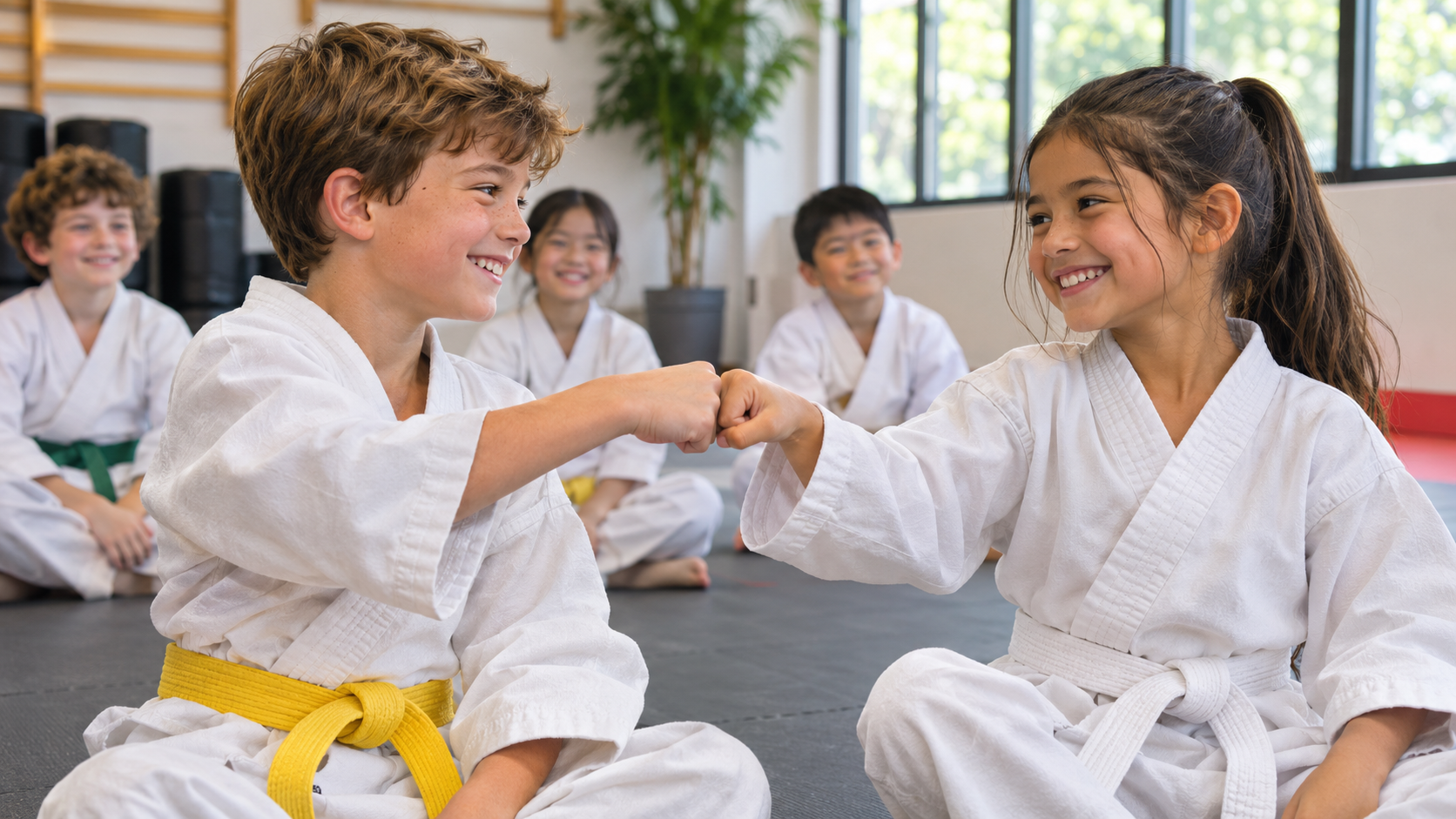
In martial arts, students experience different kinds of progress at different speeds. One student might learn a movement quickly while another needs more repetitions. The most constructive training environment allows students to be proud of improvement and supportive of peers who are still working.
Family activity: the two-part celebration
During the next week, invite everyone to share one personal win at dinner. It can be as small as finishing a hard assignment or remembering a responsibility. Ask each person to complete two sentences: “I’m proud that I…” and “Someone who helped me was…”
The second sentence is not there to reduce the achievement. It broadens the story. Soon children may begin to notice encouragement, teaching, patience, and cooperation as part of success.
If another family member has had a difficult day, make room for that reality rather than demanding everyone immediately feel cheerful.
Conversation starter
“How can we be excited about doing well and still be a good friend to someone who had a hard time?”
At Edge Martial Arts in Stillwater, we value the kind of growth that students can carry outside the training space. Celebrating with humility is a small, repeatable way families can practice that value together.